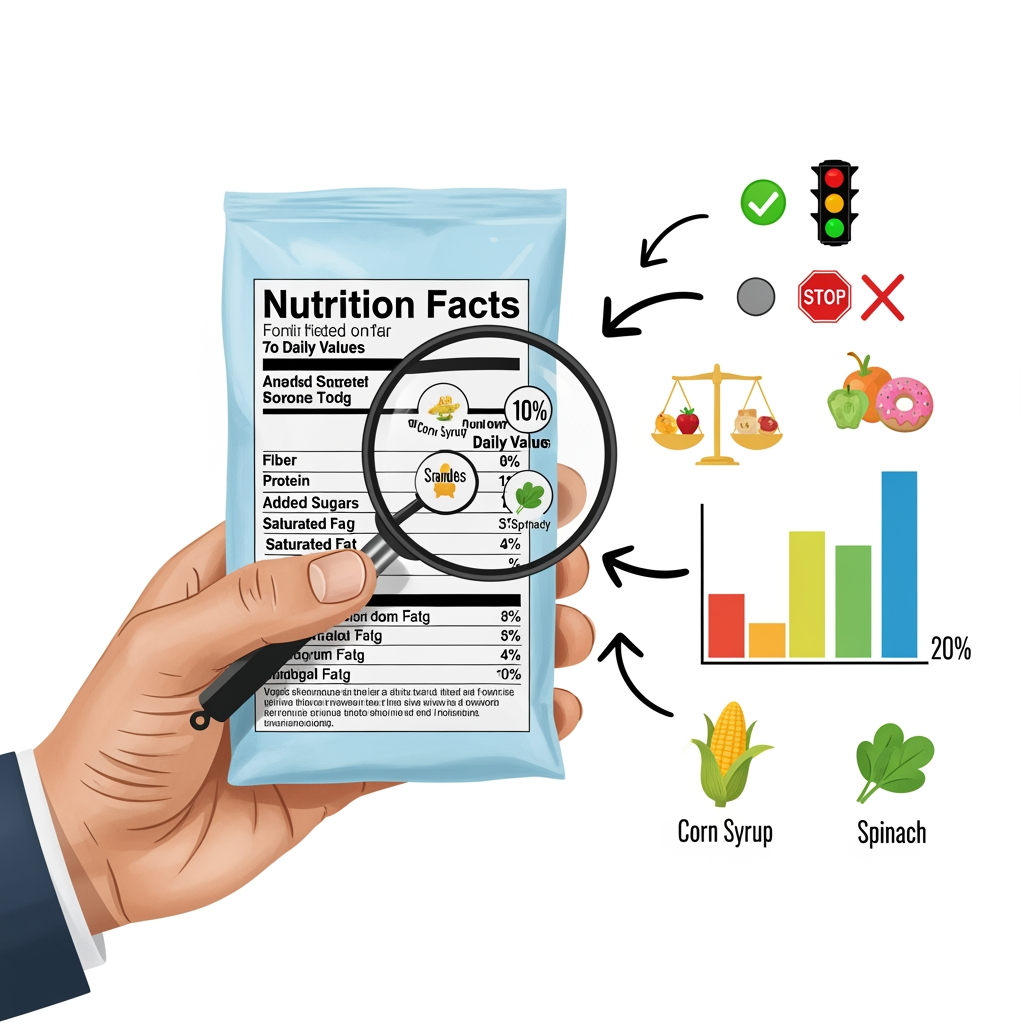
Food labels contain valuable information, but knowing how to interpret them separates informed choices from marketing tricks. Here's what actually matters when reading nutrition labels.
Serving Size Comes First
All numbers on the label relate to the serving size listed at the top. A package might contain multiple servings, making calories and nutrients seem lower than you'd actually consume eating the whole thing.
The Ingredient List
Ingredients appear in order by weight. If sugar appears first or second, that product is primarily sugar. Watch for sugar's many names: high fructose corn syrup, dextrose, maltose, and other terms ending in "-ose."
Sodium Reality Check
Recommended daily sodium is about 2,300 mg. A single serving of many processed foods contains 30-50% of this amount. Multiple high-sodium items daily adds up quickly, especially in restaurant meals.
Understanding Percent Daily Value
The %DV shows how much a nutrient contributes to a 2,000-calorie diet. Five percent or less is low; 20 percent or more is high. Use this to quickly assess whether a food is a good source of nutrients you want more of or too high in ones you're limiting.
Marketing Terms to Question
"Natural," "wholesome," and "made with real fruit" have no legal definition. "Organic" is regulated. "Low-fat" often means high-sugar. Always verify marketing claims against actual nutrition facts.
This article was generated by AI to provide informational content.