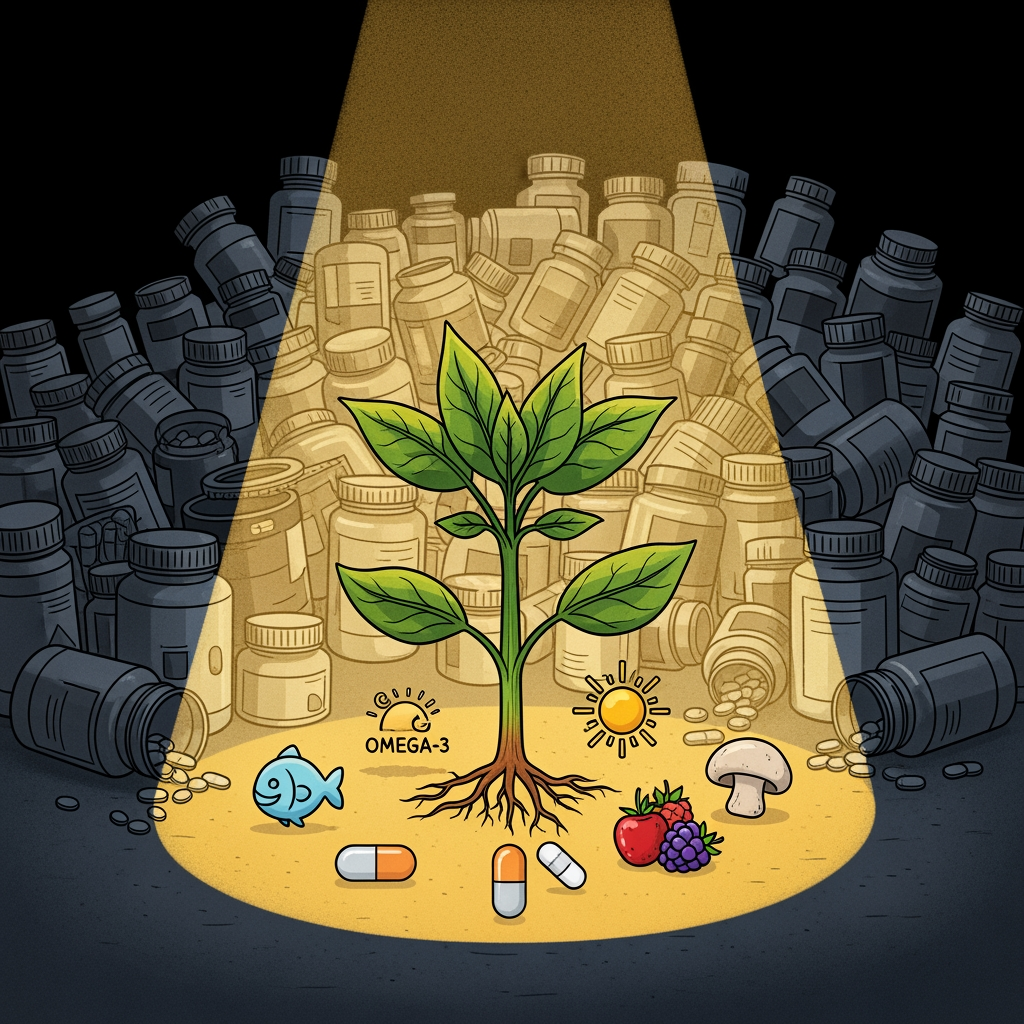
Supplement shelves promise everything from better health to longer life. But supplements are loosely regulated and often overpromising. Here's what science actually says about who needs what.
The Regulation Gap
Unlike medications, supplements don't require proof of effectiveness before sale. The FDA only acts after problems emerge. This means many products make claims unsupported by evidence, and quality varies significantly between brands.
When Supplements Make Sense
Certain populations benefit from specific supplements. Pregnant women need folic acid. Vitamin D supplementation helps those with limited sun exposure. Vitamin B12 is essential for vegans. Iron may be needed by menstruating women with heavy periods.
What Most People Don't Need
For people eating varied diets, most multivitamins provide nutrients already consumed in adequate amounts. The body absorbs nutrients from food more effectively than pills. Expensive supplement regimens often produce expensive urine.
The Risks
Some supplements interact with medications. High-dose vitamins can cause toxicity. Products may contain undeclared ingredients. "Natural" doesn't mean safe—arsenic and poison ivy are natural too.
Getting Tested
Rather than guessing, blood tests can identify actual deficiencies worth addressing. A doctor can recommend appropriate supplements at correct doses based on your specific needs rather than general marketing claims.
This article was generated by AI to provide informational content.