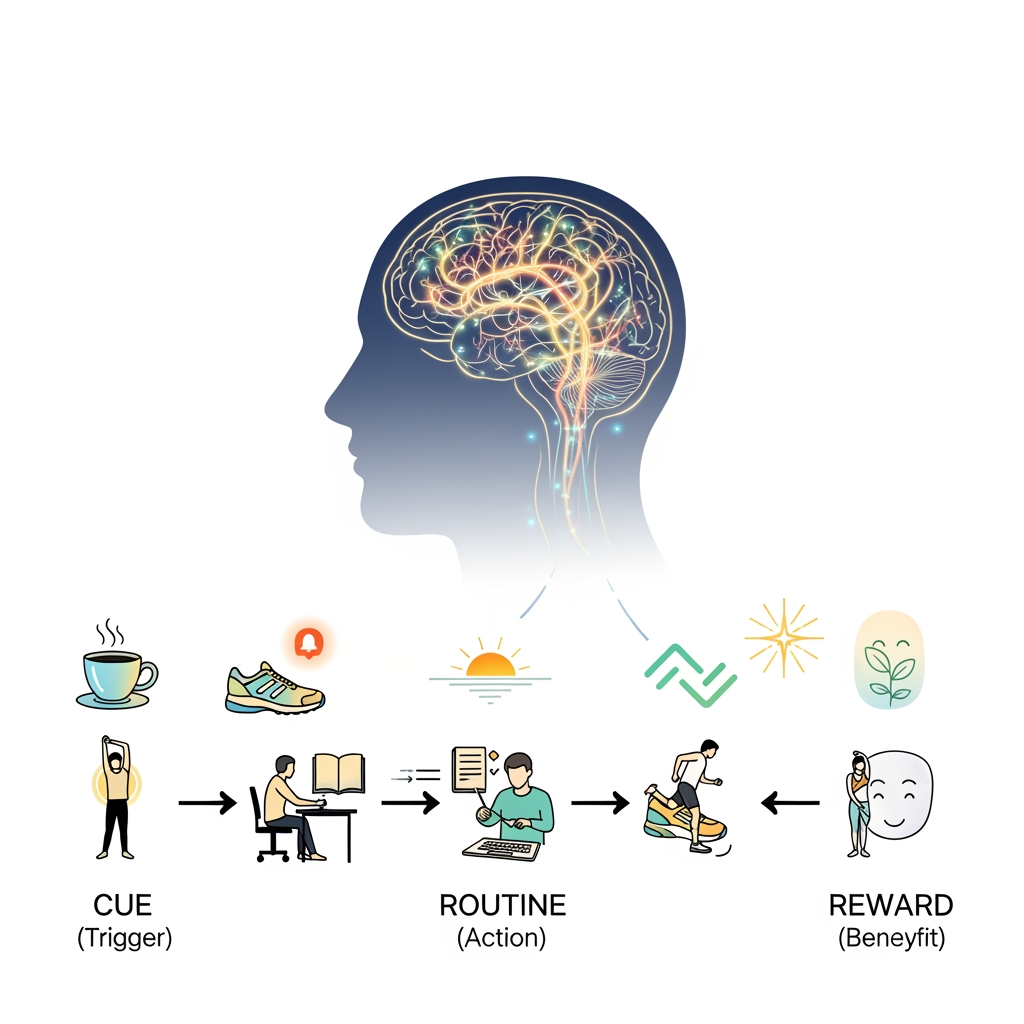
Understanding how habits form makes building healthy ones easier. Neuroscience reveals specific mechanisms you can leverage to make desired behaviors automatic rather than requiring constant willpower.
The Habit Loop
Habits consist of three parts: cue (trigger), routine (behavior), and reward (satisfaction). A cue prompts the routine, which leads to reward, which reinforces the cue-routine connection. Identifying these elements helps modify habits.
Neural Pathways
Repeated behaviors create and strengthen neural pathways. Initially, new behaviors require conscious effort. With repetition, the brain automates the process, requiring less mental energy. This is why established habits feel effortless.
The 21-Day Myth
The popular belief that habits take 21 days to form is a myth. Research suggests habits actually take 18 to 254 days, averaging around 66 days. Complexity of the behavior and individual differences affect timing.
Starting Small
Tiny habits succeed where ambitious ones fail. "Floss one tooth" is easier to stick with than "floss thoroughly." Once the trigger-routine-reward loop is established, expanding the routine is easier.
Stacking Habits
Attach new habits to existing ones. "After I pour my morning coffee, I will [new habit]" uses an established cue to trigger new behavior. The existing habit provides a reliable prompt.
Environment Design
Make good habits easy and bad habits hard. Put fruit where you see it; hide cookies. Set out workout clothes the night before. Willpower is limited; environment shapes behavior more reliably.
This article was generated by AI to provide informational content.