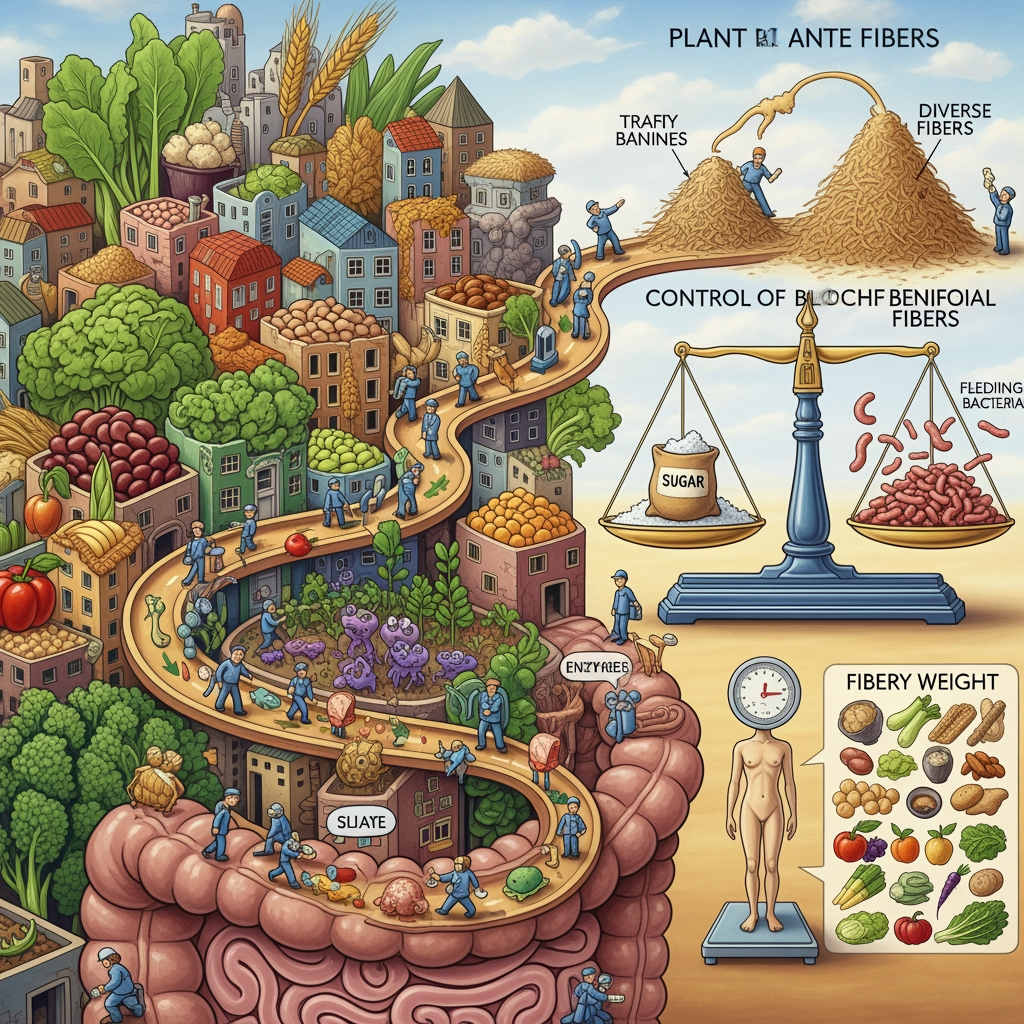
Fiber doesn't provide energy or nutrients, yet it's essential for health. Most people consume far less than recommended. Understanding fiber's benefits motivates increasing intake.
What Fiber Does
Fiber passes through your digestive system largely unchanged, but along the way it performs crucial functions. It feeds beneficial gut bacteria, adds bulk to stool, slows sugar absorption, and helps you feel full longer.
Two Types
Soluble fiber dissolves in water, forming a gel that slows digestion. Found in oats, beans, and fruits, it helps control blood sugar and cholesterol. Insoluble fiber doesn't dissolve, adding bulk that keeps things moving. Found in whole grains and vegetables, it prevents constipation.
The Recommended Amount
Adults need 25-38 grams daily. Average American intake is about 15 grams—less than half the recommendation. This gap contributes to digestive issues, heart disease risk, and weight problems.
Increasing Fiber Gradually
Adding too much fiber too quickly causes bloating and gas. Increase gradually over several weeks, allowing gut bacteria to adapt. Drink plenty of water—fiber needs fluid to work properly.
Best Sources
Legumes (beans, lentils) are fiber powerhouses. Whole grains provide more than refined versions. Vegetables, fruits with skin, and nuts all contribute. Focus on whole foods rather than fiber supplements when possible.
Fiber and Weight Management
High-fiber foods are generally lower in calories yet more filling. They slow eating pace and extend satiety. Increasing fiber often naturally reduces calorie intake.
This article was generated by AI to provide informational content.