Everyone experiences stress, but not everyone manages it effectively. While some popular advice sounds good, research shows certain techniques consistently outperform others. Here's what the science supports.
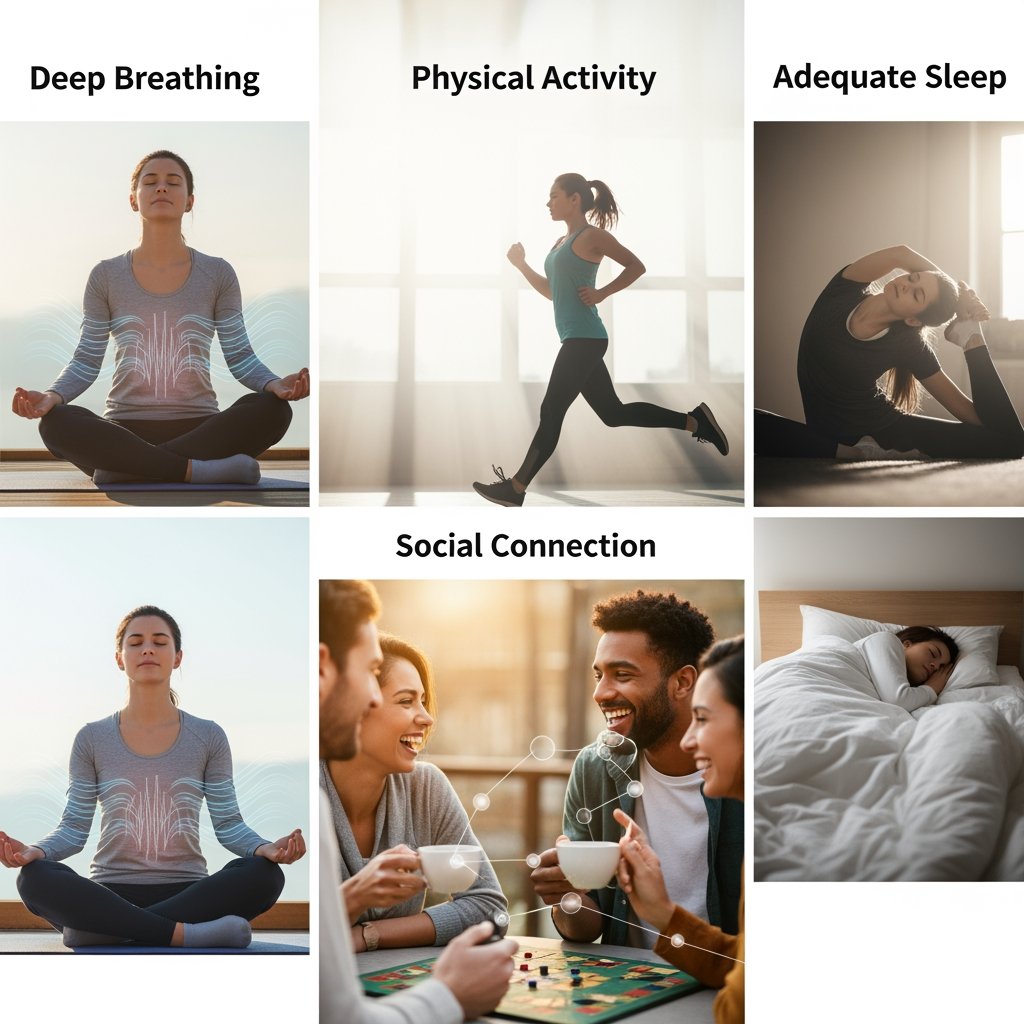
Deep Breathing
Slow, diaphragmatic breathing activates the parasympathetic nervous system, directly countering the stress response. Breathe in for 4 counts, hold for 4, exhale for 6. Even a few minutes produces measurable physiological changes.
Physical Activity
Exercise is one of the most reliable stress reducers. It burns stress hormones, triggers endorphin release, and provides distraction from worries. You don't need intense workouts—even a 20-minute walk helps.
Social Connection
Talking to supportive friends or family buffers stress effects. The conversation doesn't need to focus on problems—simple social interaction itself reduces cortisol levels and provides perspective.
Sleep Prioritization
Sleep deprivation amplifies stress responses dramatically. Making sleep non-negotiable—protecting bedtime, creating good sleep conditions—prevents the downward spiral where stress causes poor sleep which increases stress.
Limiting News and Social Media
Constant exposure to negative information maintains elevated stress states. Setting specific times for news consumption and avoiding social media comparison reduces unnecessary stress from sources you can't control.
Professional Help
When stress becomes overwhelming or chronic, professional support helps. Cognitive behavioral therapy provides tools for managing stress thoughts and responses. There's no weakness in seeking expertise.
This article was generated by AI to provide informational content.