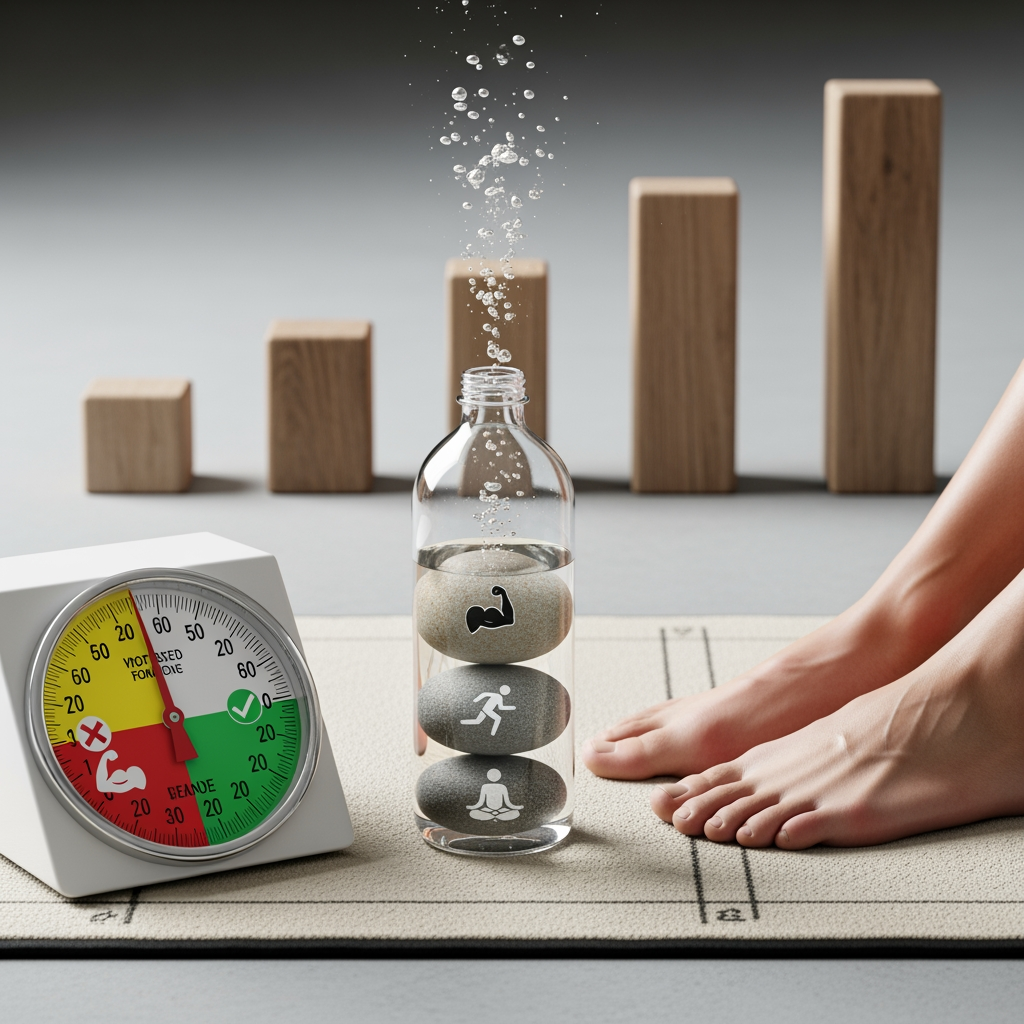
Unrealistic goals set you up for failure. Lose 30 pounds in a month? Run a marathon next week? These goals ensure disappointment. Here's how to set goals that actually lead to achievement.
SMART Framework
Effective goals are Specific, Measurable, Achievable, Relevant, and Time-bound. "Get fit" is vague. "Walk 30 minutes daily for the next month" meets all criteria and provides clear success measures.
Process vs. Outcome Goals
Outcome goals (lose 20 pounds) depend on factors beyond your control. Process goals (exercise 4 times weekly, eat vegetables at every meal) focus on actions you control. Achieving process goals usually produces desired outcomes.
Start Where You Are
Beginners shouldn't follow elite athletes' routines. Assess your current fitness honestly. Goals should stretch your current abilities modestly—challenging enough to require effort, achievable enough to maintain motivation.
Timeline Realism
Significant fitness changes take months, not weeks. Healthy weight loss is 1-2 pounds weekly. Noticeable strength gains take 4-8 weeks. Setting realistic timelines prevents discouragement when quick results don't materialize.
Adjusting Along the Way
Life changes. Injuries happen. Progress isn't linear. Build flexibility into goals. If a goal becomes too easy, increase challenge. If it's unsustainable, adjust. Goals should serve you, not the reverse.
Celebrating Progress
Acknowledge milestones along the way. The journey to big goals includes many small achievements worth celebrating. Recognition reinforces the behaviors leading to long-term success.
This article was generated by AI to provide informational content.