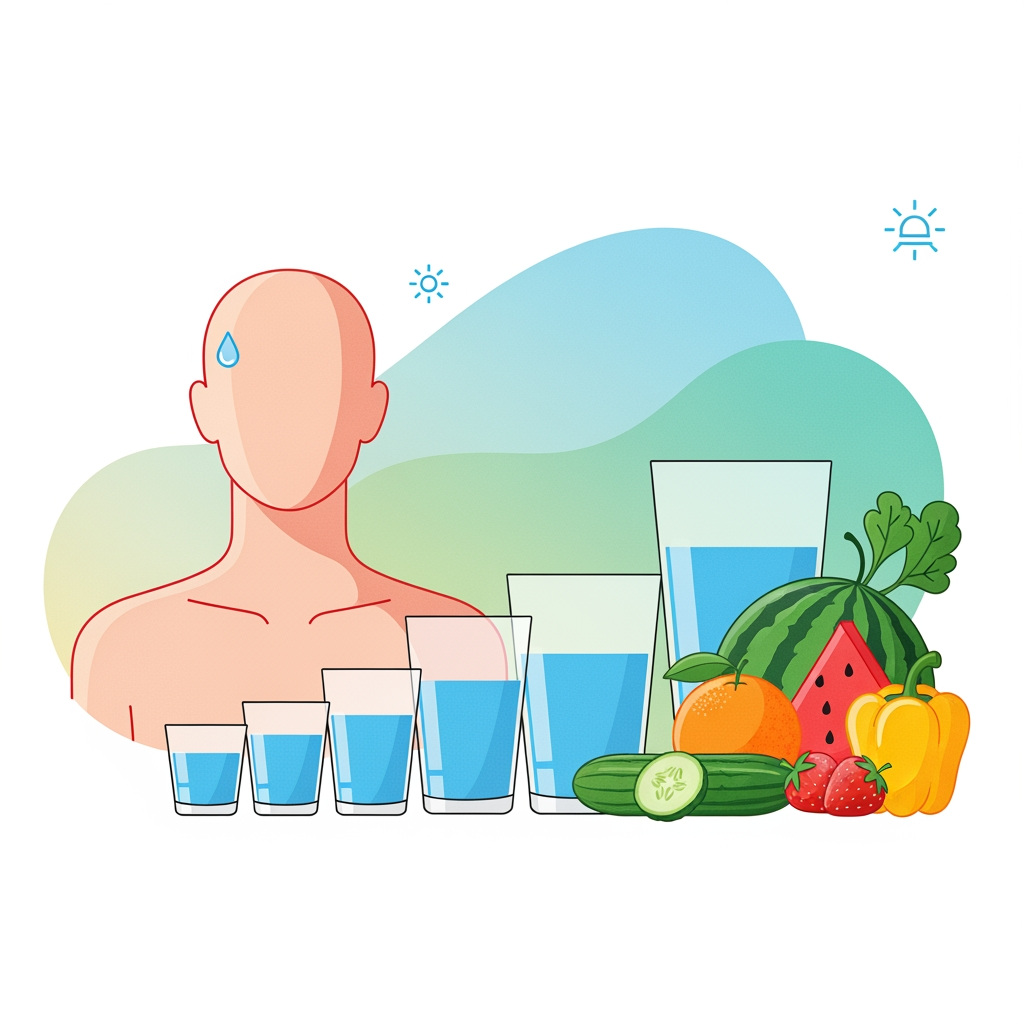
The "eight glasses a day" rule is everywhere, but it's not based on solid science. Your actual hydration needs depend on multiple factors, and your body provides reliable signals if you pay attention.
The Origin of Eight Glasses
This guideline traces to a 1945 recommendation that was misinterpreted. The original statement included water from all sources—including food. Fruits, vegetables, coffee, and other beverages all contribute to hydration.
Individual Variation
A 250-pound athlete training outdoors needs vastly more water than a sedentary office worker. Climate, activity level, body size, and diet all affect requirements. There's no universal number that fits everyone.
Trust Your Thirst
For most healthy adults, thirst is a reliable indicator. The body's homeostatic mechanisms are sophisticated—they signal need before problems develop. Unless you have specific medical conditions, drinking when thirsty generally maintains adequate hydration.
Checking Urine Color
Light yellow to clear urine suggests good hydration. Dark yellow indicates you need more fluids. But note that vitamins, medications, and certain foods can affect color independent of hydration status.
Can You Drink Too Much?
Overhydration is rare but real. Drinking excessive amounts dilutes blood sodium, potentially causing dangerous hyponatremia. This risk is highest during endurance events when people drink beyond thirst signals.
This article was generated by AI to provide informational content.