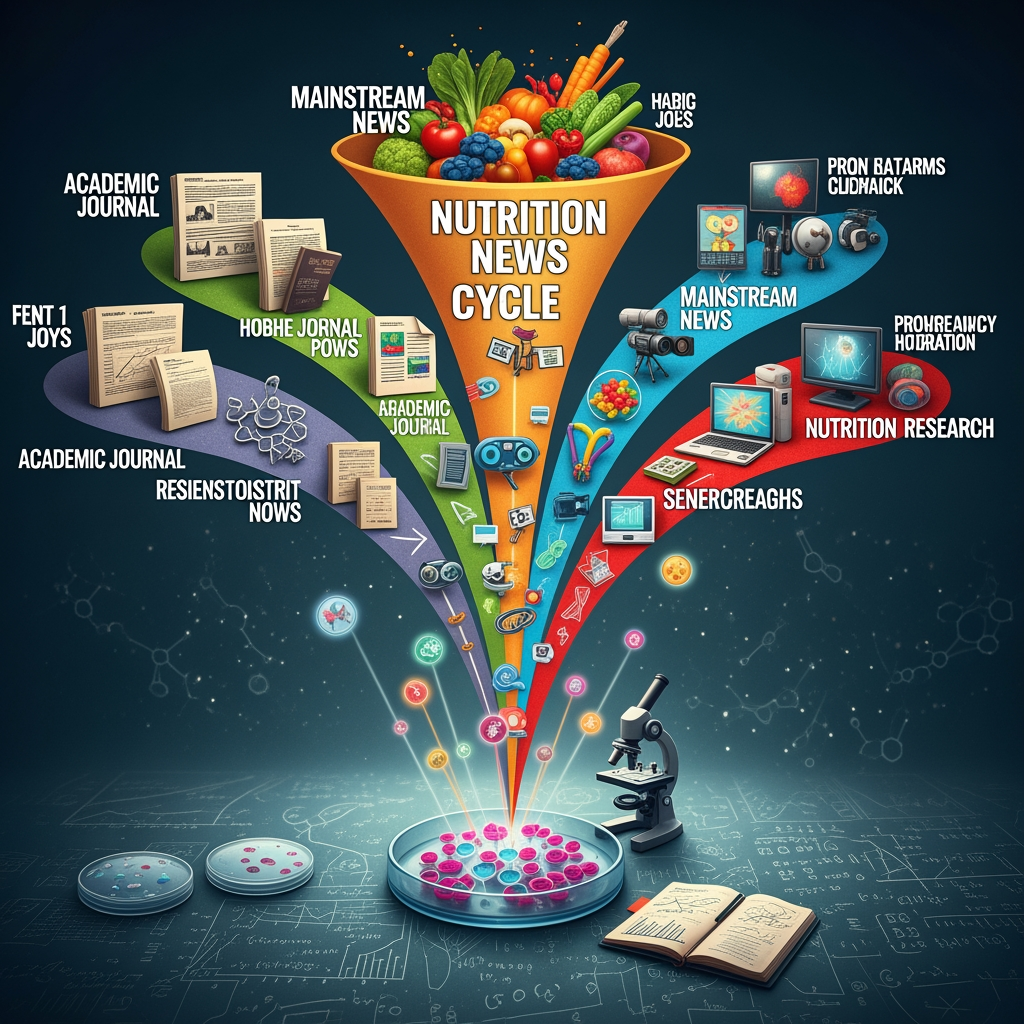
Headlines about nutrition seem to contradict each other constantly. Coffee is healthy, then dangerous, then healthy again. Understanding how to evaluate nutrition news helps separate signal from noise.
Association Isn't Causation
Observational studies find correlations, not causes. "People who eat X have higher rates of Y" doesn't prove X causes Y. Perhaps people who eat X also share other characteristics that cause Y.
Study Quality Varies
Randomized controlled trials provide stronger evidence than observational studies. Large studies with diverse populations are more reliable than small homogeneous ones. Single studies rarely prove anything—look for consistent findings across multiple studies.
Headline vs. Reality
Headlines exaggerate. "Coffee prevents cancer" might come from a study showing a slight correlation requiring further investigation. Always read beyond headlines. The actual findings are usually more modest and nuanced.
Relative vs. Absolute Risk
A "50% increased risk" sounds alarming, but if the baseline risk is 0.1%, a 50% increase means 0.15%—still very small. Absolute risk changes matter more than relative percentages for decision-making.
Funding Sources
Studies funded by food industry companies more often produce results favorable to their products. This doesn't mean they're wrong, but consider potential conflicts of interest when evaluating findings.
Expert Consensus
Major health organizations base recommendations on bodies of evidence, not single studies. When in doubt, look at what organizations like WHO or major medical associations recommend based on totality of evidence.
This article was generated by AI to provide informational content.