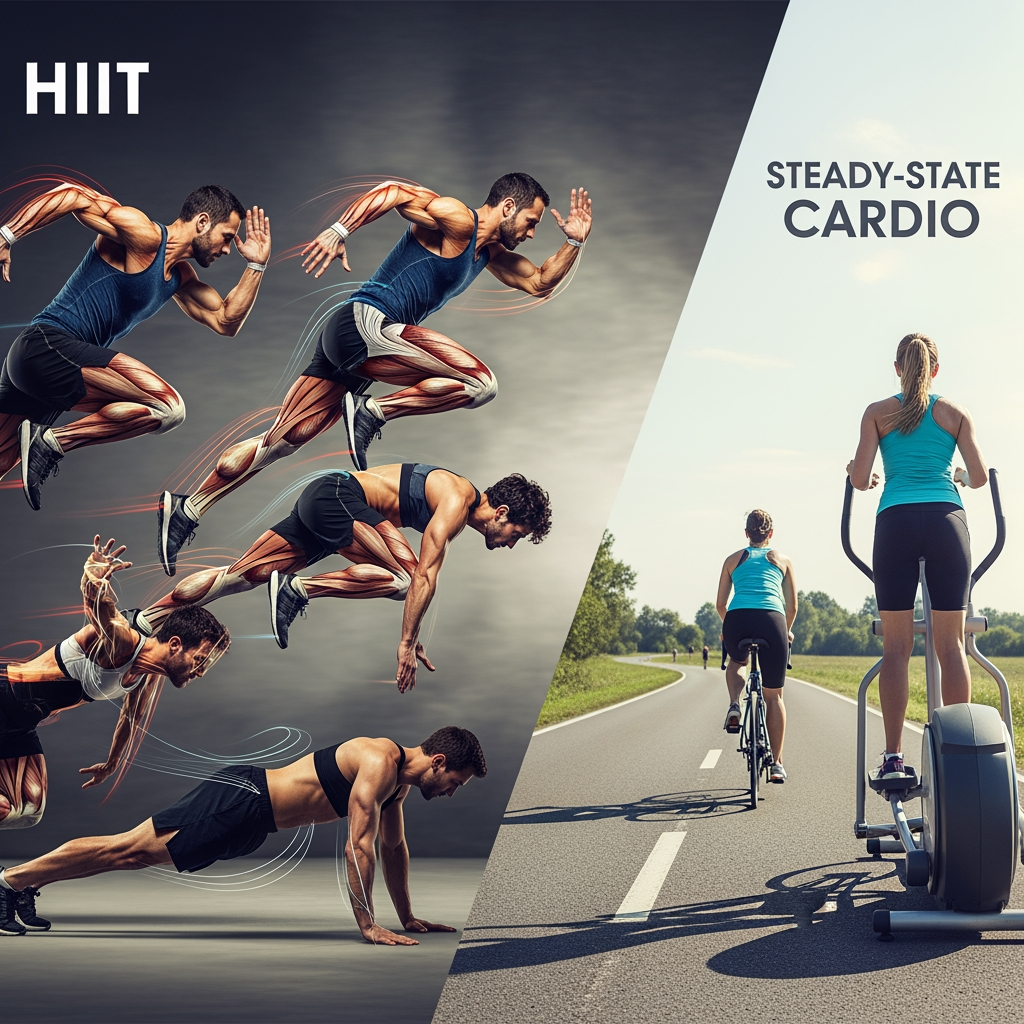
Fitness advice swings between extremes—intense HIIT workouts versus gentle steady-state cardio. The truth is both have value, and optimal fitness includes elements of each.
What High-Intensity Offers
HIIT (high-intensity interval training) produces cardiovascular improvements in less time. It boosts metabolism for hours after exercise ("afterburn"). It builds anaerobic capacity and can break fitness plateaus.
What Low-Intensity Offers
Steady-state cardio burns fat efficiently during exercise. It's sustainable for longer durations, building aerobic endurance. It's less stressful on joints and recovery systems. It's appropriate for beginners and recovery days.
Time Considerations
HIIT's efficiency appeals to busy people. A 20-minute HIIT session can provide benefits comparable to longer steady-state workouts. But the intensity isn't sustainable daily—you need recovery.
Recovery Demands
High-intensity work stresses the body significantly. Two or three HIIT sessions weekly is typically maximum for most people. More risks overtraining, injury, and burnout. Low-intensity work can happen daily.
Combining Approaches
Optimal fitness programming includes both intensities. High-intensity work 2-3 times weekly builds power and efficiency. Low-intensity work on other days builds base fitness and promotes recovery.
Match Intensity to Goals
Weight loss? Both work when calories are managed. Athletic performance? Specificity matters—train how you'll perform. General health? A mix provides comprehensive cardiovascular fitness.
This article was generated by AI to provide informational content.