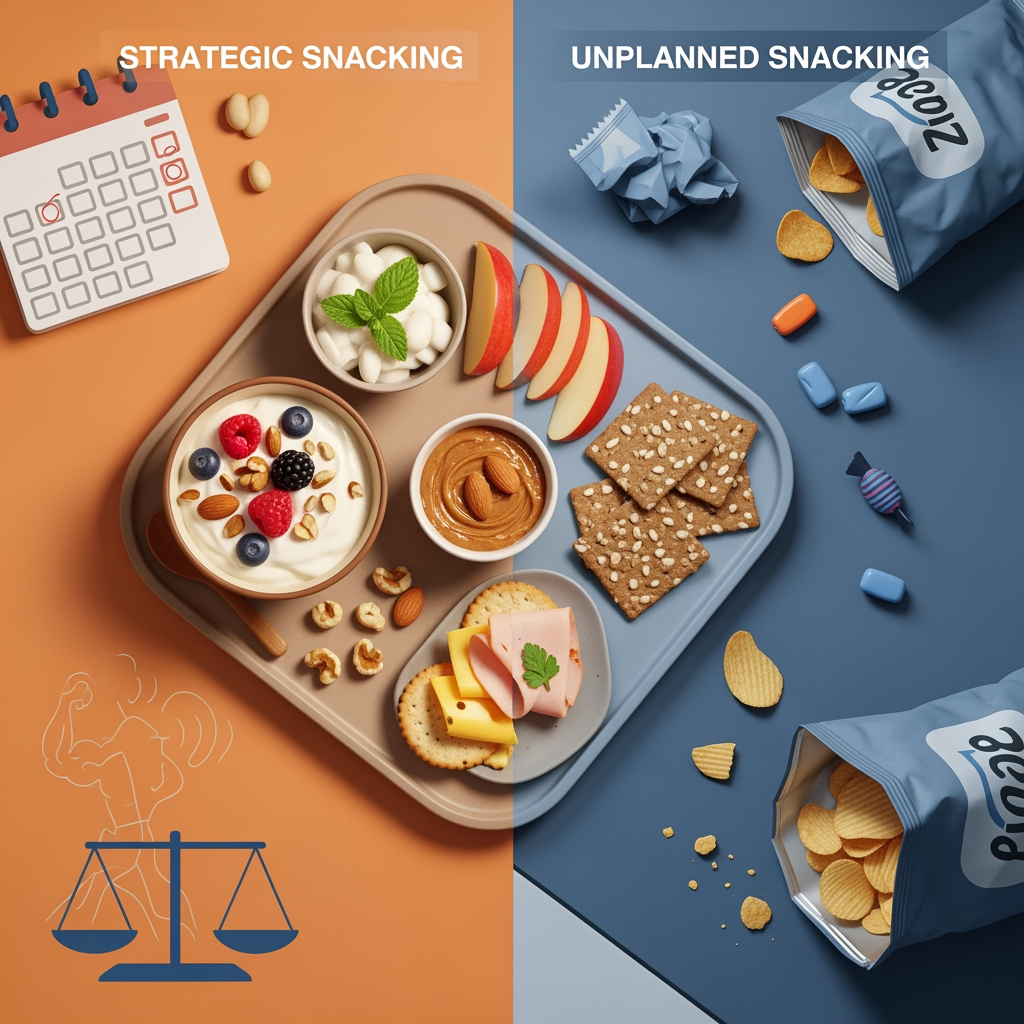
Snacking gets blamed for diet failures, but strategic snacking actually supports health goals. The key is choosing the right foods at the right times for the right reasons.
Snack With Purpose
Distinguish between hunger snacking and emotional or boredom snacking. Physical hunger builds gradually and any food sounds good. Emotional eating strikes suddenly and craves specific foods. Address the root cause appropriately.
Plan Your Snacks
Unplanned snacking leads to vending machines and convenience store choices. Prepare healthy snacks in advance and have them accessible. When hunger strikes, the easiest option should be a good one.
Combine Protein and Fiber
Carbohydrate-only snacks spike blood sugar and leave you hungry soon after. Pairing protein or fat with fiber creates sustained energy. Apple with nut butter beats apple alone. Cheese with whole grain crackers outlasts crackers solo.
Portion Control Matters
Even healthy foods add calories. Pre-portion snacks rather than eating from packages. A handful of nuts is healthy; half a jar is excessive. Know roughly how much you're consuming.
Smart Snack Options
Hard-boiled eggs, Greek yogurt, vegetable sticks with hummus, a small handful of nuts, cheese with fruit, or edamame all provide nutrition that sustains. Avoid anything listing sugar as a first ingredient.
Timing Considerations
Snacking between meals prevents the extreme hunger that leads to overeating at meals. A small afternoon snack can prevent dinner overindulgence. But unnecessary snacking when not hungry adds unneeded calories.
This article was generated by AI to provide informational content.