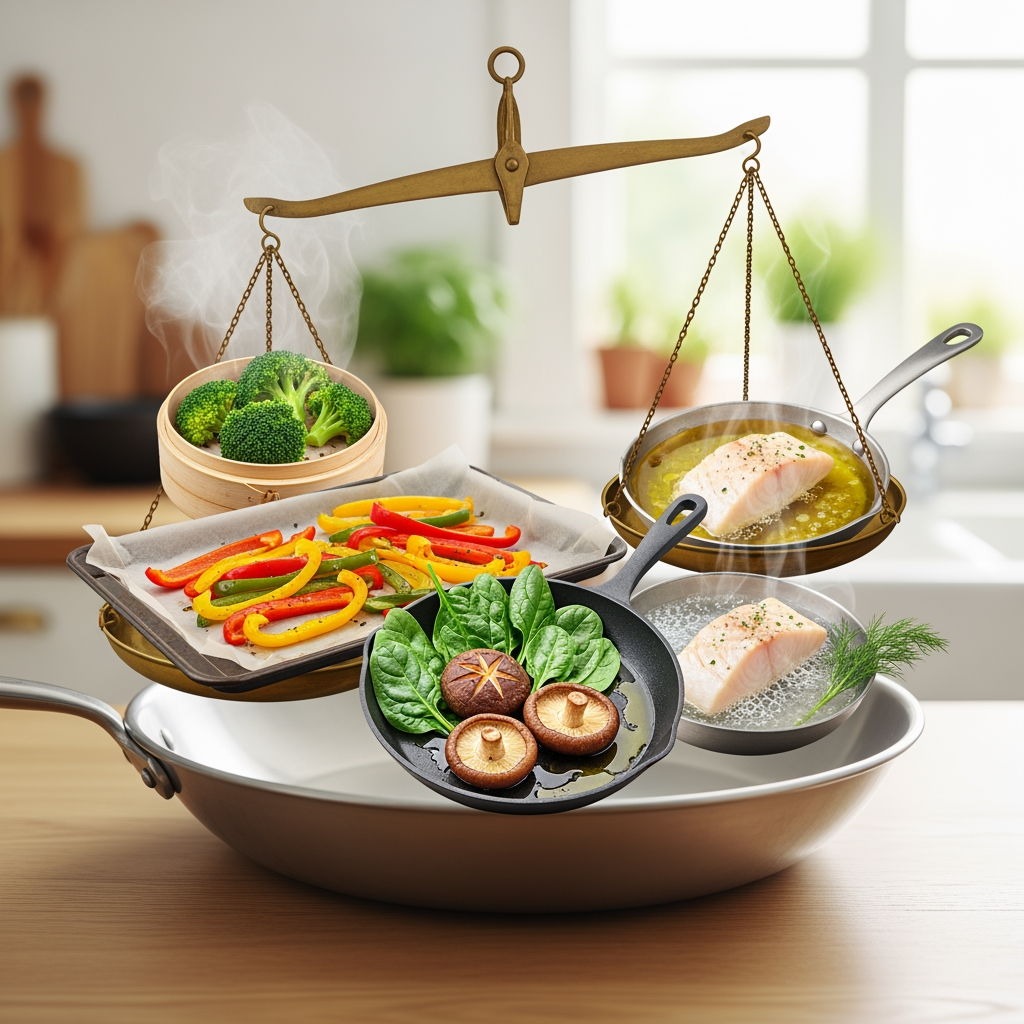
How you cook affects nutrition as much as what you cook. Some methods preserve nutrients and minimize added fats while others destroy vitamins or add unnecessary calories. Here's how to cook healthier.
Steaming
Steam preserves more nutrients than most cooking methods because food doesn't contact water directly. Vitamins that would leach into boiling water stay in the food. Steaming requires no added fat.
Roasting and Baking
High dry heat develops flavor through caramelization without added fat. Line pans with parchment for easy cleanup without grease. Roasted vegetables often taste better than raw, encouraging greater vegetable consumption.
Sautéing with Healthy Fats
Quick cooking in small amounts of olive oil preserves nutrients while adding healthy fats that help absorb fat-soluble vitamins. Use moderate heat to prevent oil from smoking and producing harmful compounds.
Poaching and Simmering
Cooking in liquid without fat keeps calories low. Poached fish and eggs retain moisture and tenderness. Use flavorful broths or seasoned water for added taste without added fat.
Grilling
Grilling allows fat to drip away from food while creating appealing flavors. Avoid charring, which creates potentially carcinogenic compounds. Marinating before grilling reduces harmful compound formation.
Methods to Limit
Deep frying adds significant calories from oil absorption. Boiling vegetables in lots of water leaches water-soluble vitamins. Heavy cream-based cooking adds saturated fat and calories. These methods aren't forbidden—just use sparingly.
This article was generated by AI to provide informational content.