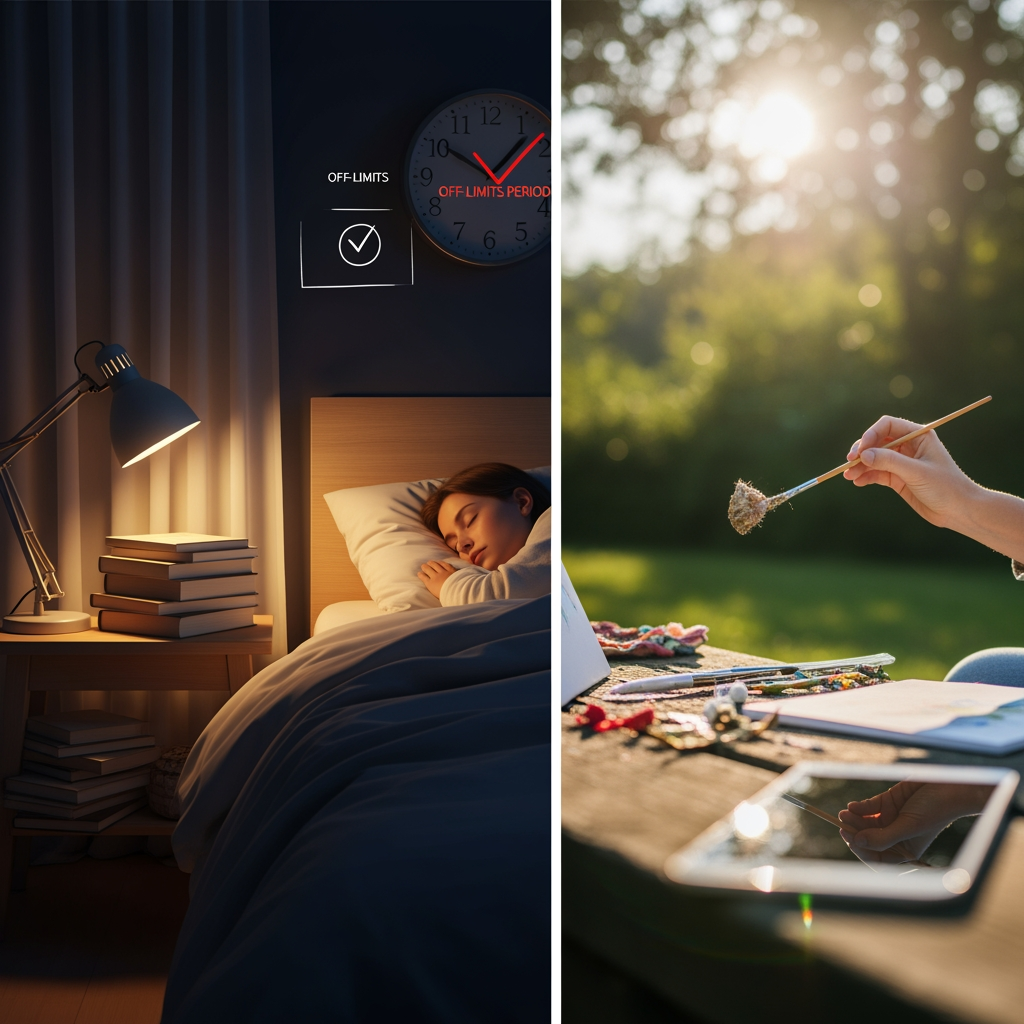
Constant connectivity takes a toll. Screens compete for attention, notifications trigger stress responses, and comparison on social media affects mental health. Intentional breaks from devices offer real benefits.
Why Detox Matters
Excessive screen time correlates with anxiety, depression, and sleep problems. Blue light disrupts circadian rhythms. The constant stimulation prevents deep focus. Social media comparison affects self-esteem. Taking breaks addresses all these issues.
Start With Sleep
The easiest digital detox is phone-free bedrooms. Screens before sleep delay melatonin release. Notifications disrupt sleep quality. Charge your phone outside the bedroom and use an actual alarm clock.
Scheduled Offline Time
Designate specific times—meals, the first hour after waking, evenings after 8pm—as device-free. These boundaries create predictable offline periods without requiring complete abstinence.
Notification Audit
Review which apps can interrupt you. Most notifications aren't urgent. Disable all but essential alerts. Batch-check social media and email at set times rather than responding to every ping.
Replace With Activities
Detox creates free time—fill it intentionally. Reading, exercise, hobbies, face-to-face socializing all provide benefits screens don't. Without replacement activities, you'll drift back to devices by default.
Gradual Approach
Cold turkey creates strong resistance. Gradually extending offline periods works better for most people. Small sustainable changes beat dramatic temporary ones.
This article was generated by AI to provide informational content.