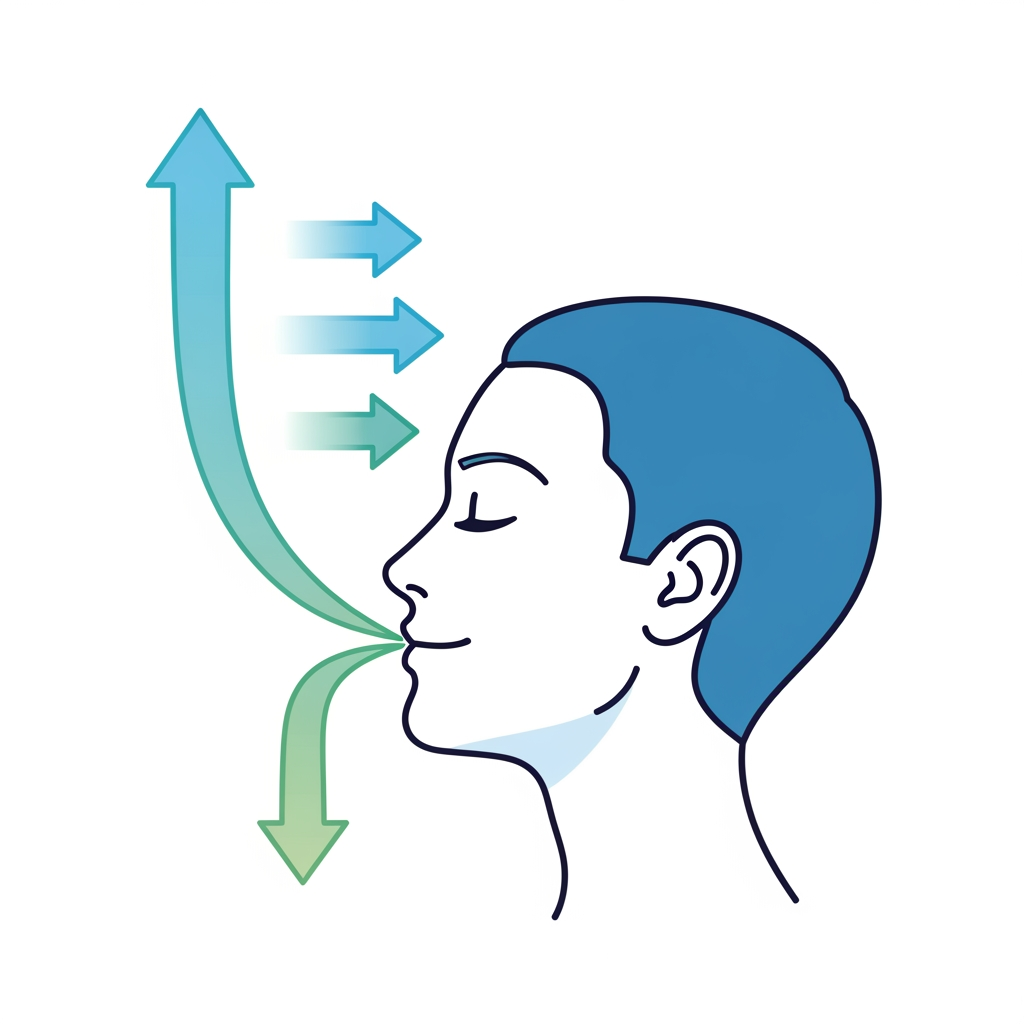
Your breath directly affects your nervous system. Specific breathing patterns can shift your body from stressed to calm within minutes. These techniques require no equipment and work anywhere.
Why Breathing Works
Slow, deep breathing activates the parasympathetic nervous system—the "rest and digest" state. It lowers heart rate, reduces blood pressure, and decreases cortisol. The effect is physiological, not just psychological.
4-7-8 Breathing
Inhale through nose for 4 counts. Hold breath for 7 counts. Exhale through mouth for 8 counts. Repeat 4 times. The extended exhale triggers relaxation response. This technique is particularly helpful for falling asleep.
Box Breathing
Inhale for 4 counts. Hold for 4 counts. Exhale for 4 counts. Hold for 4 counts. Repeat. Used by Navy SEALs for stress management, this creates focus and calm in high-pressure situations.
Diaphragmatic Breathing
Place one hand on chest, one on belly. Breathe so that only your belly hand rises. Chest stays still. This ensures you're using your diaphragm fully, maximizing oxygen exchange and relaxation benefits.
When to Use
Before stressful events—presentations, difficult conversations, medical procedures. During anxiety episodes. When you notice tension building. Before bed for better sleep. Anytime you need to shift from stressed to calm.
Building a Practice
Like any skill, breathing techniques improve with practice. Start with just 2-3 minutes daily. Over time, you'll be able to activate calm states faster and more reliably when needed.
This article was generated by AI to provide informational content.