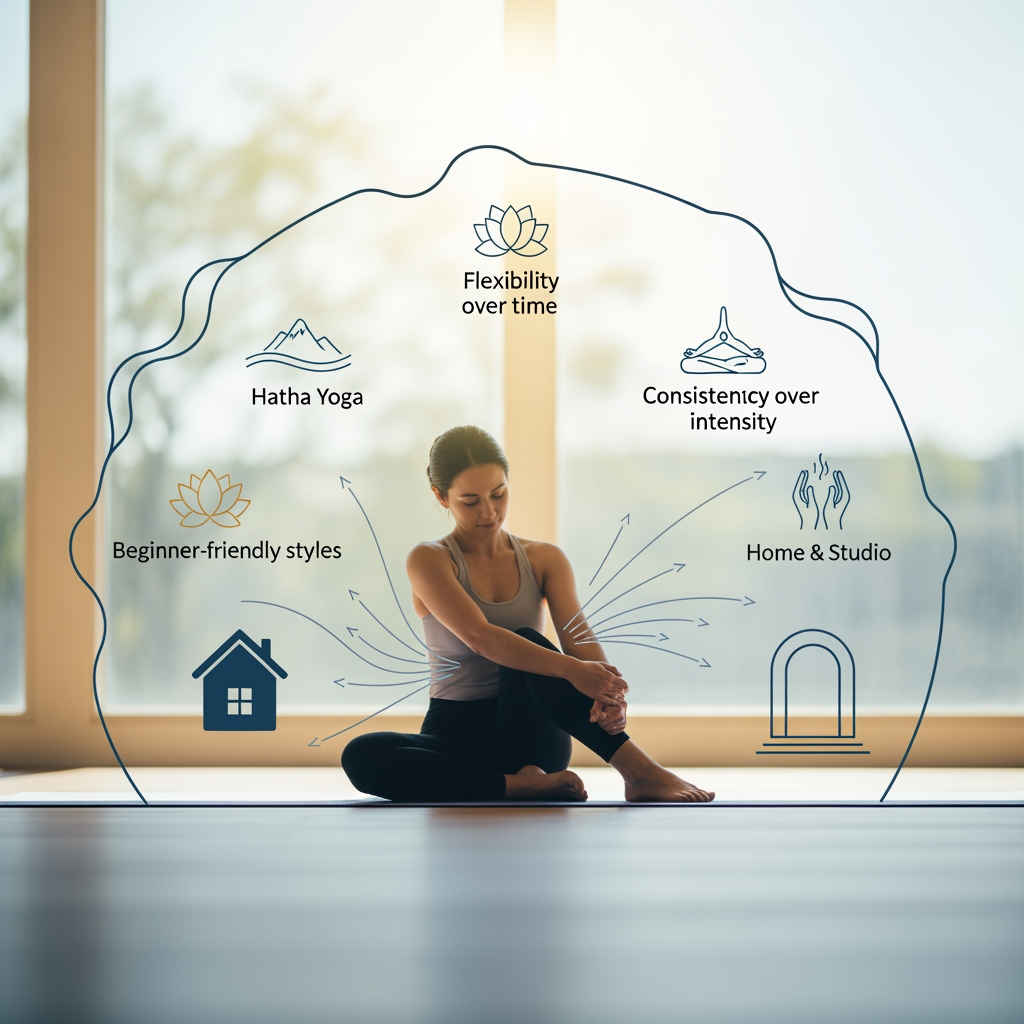
Yoga's benefits—flexibility, strength, stress reduction, and improved focus—are well-documented. But walking into a yoga class as a beginner can feel intimidating. Here's how to start comfortably.
You Don't Need to Be Flexible
The biggest misconception: you must already be flexible to do yoga. Flexibility is a result of yoga practice, not a prerequisite. Everyone starts where they are, and poses adapt to individual bodies.
Choosing a Style
Hatha yoga moves slowly and is ideal for beginners. Vinyasa flows continuously and offers more cardio. Yin holds poses for minutes, deeply stretching connective tissue. Restorative focuses on relaxation. Try different styles to find your preference.
Home vs. Studio
Home practice offers convenience and privacy. YouTube provides countless free beginner classes. Studio classes provide direct feedback from instructors who can correct alignment. Many people benefit from starting with a few studio classes before home practice.
What You Need
A yoga mat provides cushioning and grip. Comfortable clothing that allows movement is essential. Blocks and straps help beginners access poses their flexibility doesn't yet allow. Most studios provide props.
Basic Etiquette
Arrive early to settle in. Turn off phones. Avoid strong fragrances. It's okay to rest in child's pose whenever needed. Don't compare yourself to others—everyone is focused on their own practice.
Start Slowly
Once or twice weekly is plenty for beginners. Muscles need recovery time to adapt. Pushing too hard too fast leads to injury and burnout. Consistency over intensity builds lasting practice.
This article was generated by AI to provide informational content.