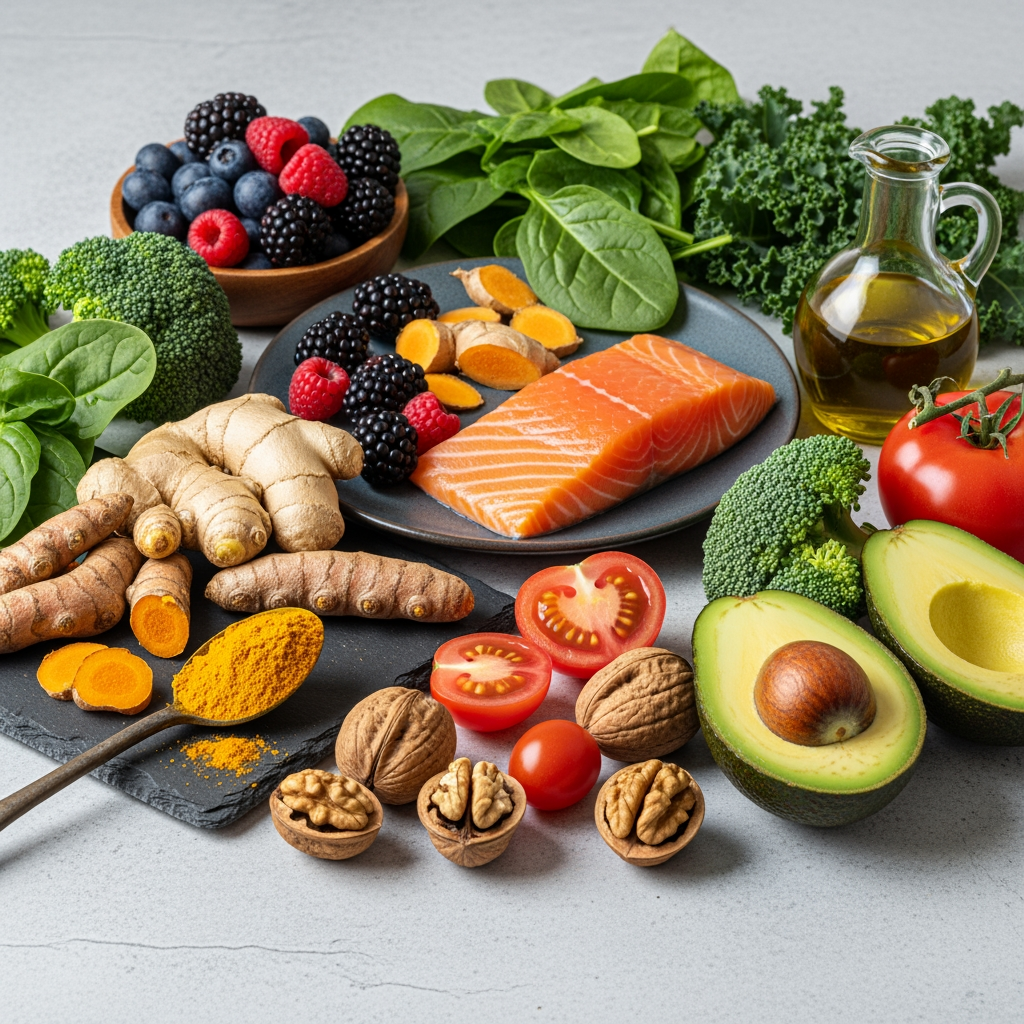
Chronic inflammation underlies many diseases—heart disease, diabetes, cancer, and autoimmune conditions. Diet significantly affects inflammation levels. These foods help calm inflammatory responses.
Fatty Fish
Salmon, mackerel, sardines, and anchovies are rich in omega-3 fatty acids with strong anti-inflammatory effects. Aim for two servings weekly. If you don't eat fish, consider algae-based omega-3 supplements.
Berries
Blueberries, strawberries, and blackberries contain anthocyanins—antioxidants with anti-inflammatory properties. Fresh or frozen, these fruits provide benefits along with fiber and vitamins.
Leafy Greens
Spinach, kale, and other dark leafy vegetables contain antioxidants and anti-inflammatory compounds. They're also high in vitamins while being low in calories. Daily consumption supports overall health.
Olive Oil
Extra virgin olive oil contains oleocanthal, which has effects similar to anti-inflammatory medications. Use it as your primary cooking oil and salad dressing base. Quality matters—choose extra virgin from reputable sources.
Nuts
Almonds, walnuts, and other nuts provide healthy fats, fiber, and anti-inflammatory compounds. A small handful daily offers benefits without excessive calories.
Turmeric
Curcumin, the active compound in turmeric, has well-documented anti-inflammatory effects. Combine with black pepper to enhance absorption. Use in cooking or take as a supplement.
Foods to Limit
Processed foods, refined sugars, and excessive alcohol promote inflammation. Reducing these while increasing anti-inflammatory foods creates compounding benefits.
This article was generated by AI to provide informational content.